Media and Information Assemblies of the Organization of Turkic States Held in Baku: First Step in the T-BRAF Process
Strategic partnership against global threats emphasized through media cooperation.
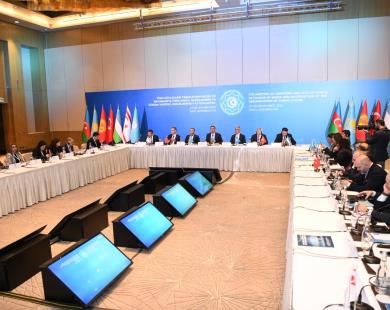
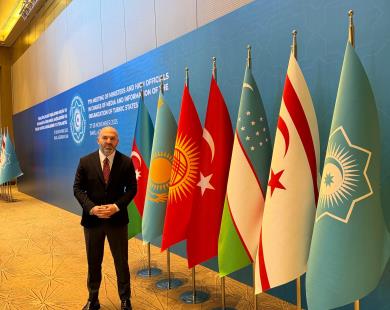
The Organization of Turkic States (OTS) held the “7th Meeting of Ministers and High-Level Officers Responsible for Media and Information” and the “12th Meeting of The Organization of Turkic States Media and Information Working Group” on November 27–28, 2025 in Baku, Azerbaijan, with the aim of strengthening cooperation in the field of media and information.
Broad participation led by the Directorate of Communications
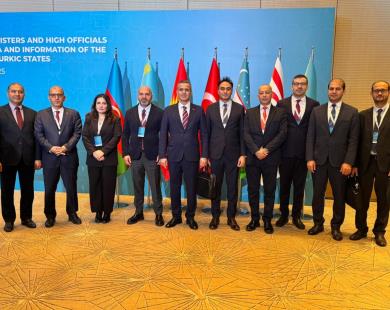
The meetings organized within the Organization of Turkic States were led by the Directorate of Communications of the Republic of Türkiye. Representatives from the Radio and Television Supreme Council (RTÜK), the Turkish Radio and Television Corporation (TRT), Anadolu Agency and the Press Advertisement Institution (BİK) were also attended the meetings. It was stated that the meetings contributed to strengthening the collaborative works.
This year’s sessions focused on enhancing institutional resilience in the digital media environment, establishing common standards, and transforming multi-stakeholder media cooperation into permanent mechanisms.
Attendance of high-level delegation
The Turkish delegation attended the meetings with high-level representatives, including:
Birol Akgün, Ambassador of the Republic of Türkiye to Baku;
Ferhat Pirinççi, Deputy Director of Communications;
Hasan Davulcu, Member of the Radio and Television Supreme Council;
Alptekin Cihangir İşbilir, Communications Counsellor at the Embassy of Türkiye in Baku;
Oğuz Güner, Head of the Public Diplomacy Department of the Directorate of Communications;
Alptekin Cihangir İşbilir, Communications Counsellor at the Embassy of Türkiye in Baku;
Oğuz Güner, Head of the Public Diplomacy Department of the Directorate of Communications;
Deniz Demir, Head of the Department at the Directorate of Communications;
Mustafa Sarıtaş, Director of Foreign Relations of TRT;
Mustafa Sarıtaş, Director of Foreign Relations of TRT;
Ramazan Akzeybek, Communications Expert at the Directorate of Communications;
Hazar Duran, Strategic Communications and Brand Management Director of Anadolu Agency; and
Atakan Erdem, Supreme Council Expert of the RTÜK.
Opening sessions emphasized the cooperation against global information threats
The meetings began with the opening ceremony of the “7th Meeting of Ministers and High-Level Officers Responsible for Media and Information.”
Speaking at the opening, Azerbaijani Vice President Hikmet Hajiyev stated that global information threats are becoming increasingly complex and that media cooperation among Turkic states creates a resilient ecosystem of dialogue and trust against these threats. Ömer Kocaman, Deputy Secretary General of the OTS, emphasized the strategic importance of cooperation in combating disinformation not only regionally but also internationally.
RTÜK’s assessment of the T-BRAF process
RTÜK Member Hasan Davulcu stated that the first step of the T-BRAF process had been taken in Azerbaijan and that he and RTÜK Expert Atakan Erdem attended the assemblies on behalf of RTÜK.
Mr.Davulcu said:
“Under the leadership of our Directorate of Communications, and with the participation of officials from the Turkish Radio and Television Corporation, Anadolu Agency, and the Press Advertisement Institution, the discussions contributed to further strengthening our joint areas of work. With the 2026 Action Plan, I believe that this process will evolve into a more systematic and effective structure. I hope that the Turkic States Broadcasting Regulatory Authorities Forum (T-BRAF) will bring positive outcomes.”
“Under the leadership of our Directorate of Communications, and with the participation of officials from the Turkish Radio and Television Corporation, Anadolu Agency, and the Press Advertisement Institution, the discussions contributed to further strengthening our joint areas of work. With the 2026 Action Plan, I believe that this process will evolve into a more systematic and effective structure. I hope that the Turkic States Broadcasting Regulatory Authorities Forum (T-BRAF) will bring positive outcomes.”
Joint declarations and the 2026 Action Plan
The agenda item titled “Determination of the venue and date for the signing ceremony of the T-BRAF Joint Declaration and T-BRAF Charter” was discussed during the meeting. It was noted that the establishment processes for the “Turkic States Regulatory Authorities Forum (T-BRAF),” included in Article 19 of the 2026 Declaration and Action Plan, would strengthen the common institutional will.
In line with the meeting decisions, the adoption of the 2026 Declaration and Action Plan became official, while the locations and dates for the 8th and 13th Working Group meetings in 2026 were also determined. It was announced that the T-BRAF founding meeting was added to the 2026 Action Plan.
Furthermore, it was decided that the signing of the 2026 T-BRAF Joint Declaration and the approval of the T-BRAF Charter would be hosted by the Radio and Television Supreme Council in Türkiye.
The new information age was discussed in panels
As part of 12th Meeting of The OTS Media and Information Working Group on November 27th, two panels were held. The first panel was titled “Resilient and Preventive Measures Against Increasing Global Information Threats in the Modern Age: The Media Ecosystem of the OTS”. The second panel focused on “Mutual Cooperation Opportunities Among OTS Member States in the Digital Media Environment.”
During the panels, Alptekin Cihangir İşbilir, Communications Counsellor at the Turkish Embassy in Baku, and Mustafa Lakadamyalı, Undersecretary of the Ministry of Foreign Affairs of the Turkish Republic of Northern Cyprus, addressed the necessity of establishing a joint media resilience mechanism against global information threats.
Cultural and diplomatic visits
Following the official sessions, a gala dinner was held in honor of the participants on November 28th. The gala dinner highlighted the shared cultural heritage of the Turkic world and conveyed the message that the long-term ties established between media and diplomacy would be transformed into concrete projects. At the end of the programme, participants explored historical sites, the shores of the Caspian Sea and the modern face of Baku as part of a cultural city tour. It was assessed that the meetings laid the groundwork for lasting cooperation among Turkic states in the field of media and information.